A Guide to Introducing Dogs and Cats
Living in a multi-species household with both dogs and cats can be a rewarding experience, but it requires careful planning and patience to ensure a harmonious relationship between these two different species. Whether you're introducing a dog to a household with cats or vice versa, the process can be complex and stressful for both animals if not handled correctly. This guide aims to provide a detailed step-by-step approach to introducing dogs and cats, fostering positive interactions, and ultimately achieving a peaceful coexistence in your home.
Preparing for the Introduction
Assessing the Temperaments: Evaluate the personalities and temperaments of both the dog and the cat to anticipate potential challenges and tailor the introduction process accordingly.
Creating Separate Spaces: Establish separate living areas for the dog and the cat initially to minimize stress and provide a safe space for each pet to retreat to.
Preparing the Environment: Make necessary adjustments to the environment, such as installing baby gates or providing vertical spaces for the cat to escape to, to ensure the safety and comfort of both pets during the introduction phase.


Scent Exchange and Familiarisation
Scent Introduction: Introduce the pets to each other's scents by exchanging bedding, toys, or blankets to familiarize them with each other's presence before the face-to-face introduction.
Controlled Access: Allow controlled access to each other's living spaces by rotating the pets' belongings gradually, allowing them to become accustomed to each other's scent without direct interaction.
Positive Associations: Use positive reinforcement techniques, such as treats or praise, to associate each other's scent with pleasant experiences, building positive associations between the pets.
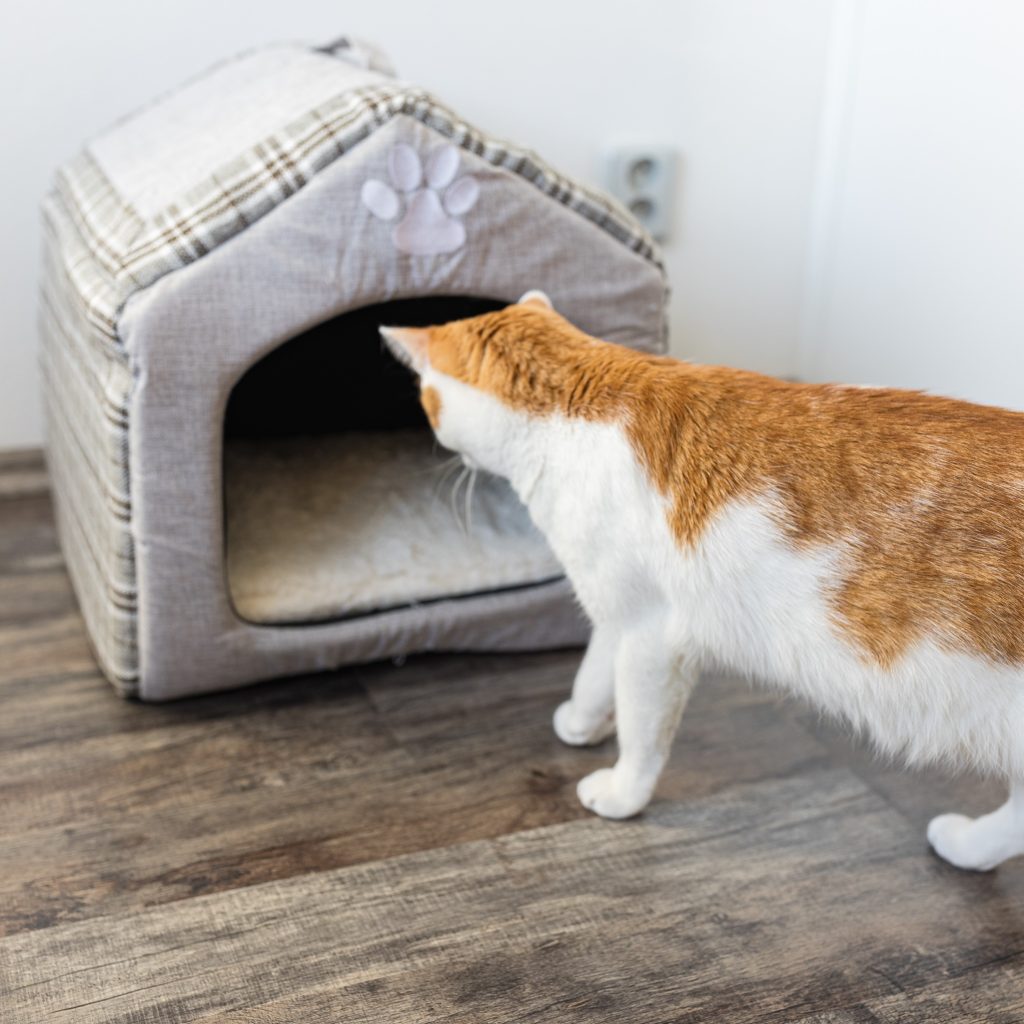

Controlled Visual Introduction
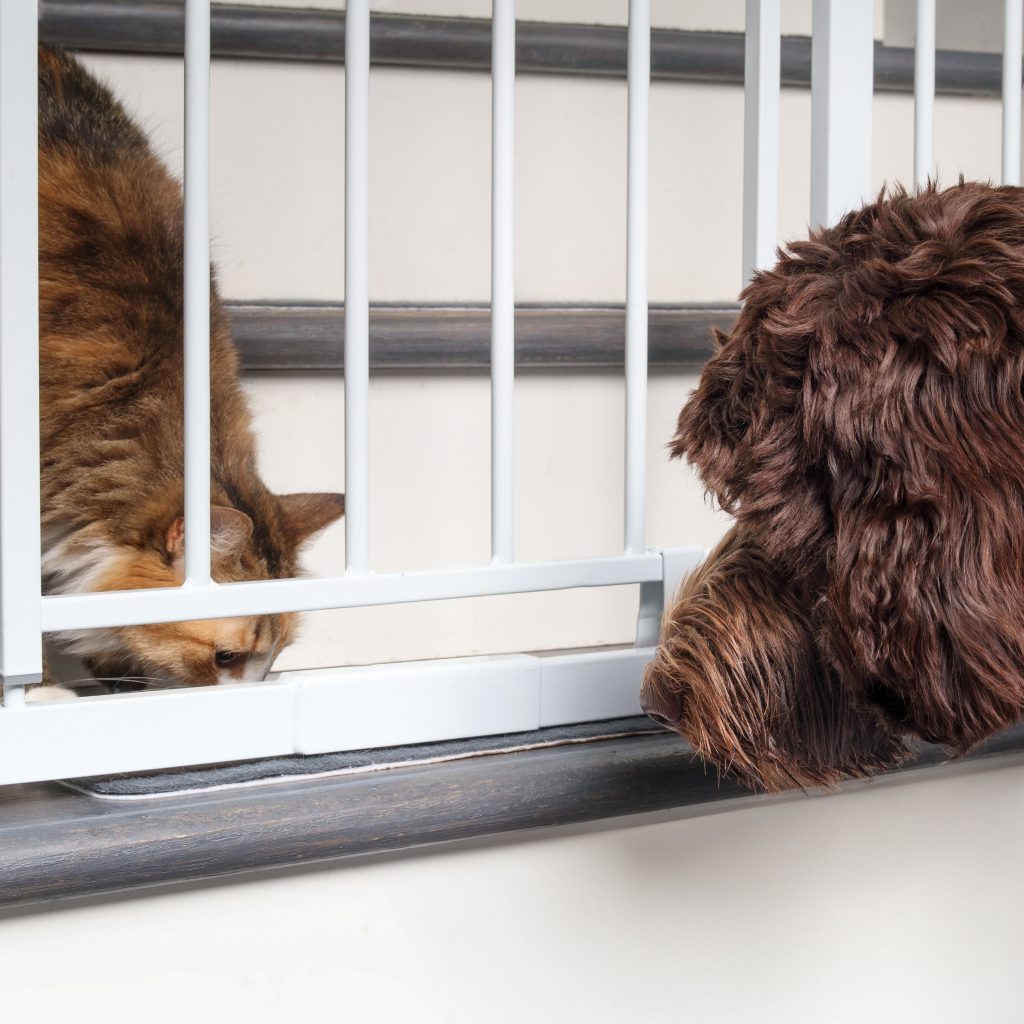
Introduction through a Barrier: Initiate the first visual introduction by using a barrier, such as a baby gate or a door crack, to allow the pets to see and smell each other while maintaining a safe distance.
Observing Body Language: Monitor the pets' body language closely for signs of stress, fear, or aggression, and intervene promptly if necessary to prevent any negative interactions.
Gradual Exposure: Increase the duration and frequency of visual interactions gradually, observing the pets' reactions and adjusting the pace of the introduction accordingly.

Supervised Introductions
Leashed Introductions: Introduce the pets in a controlled environment, with both the dog and the cat securely leashed, allowing for supervised interactions while maintaining control over the situation.
Positive Reinforcement: Use positive reinforcement techniques, such as treats and praise, to reward calm and appropriate behaviour from both pets during the initial interactions.
Redirecting Negative Behaviour: Anticipate and redirect any signs of aggression or predatory behaviour from the dog, while providing the cat with opportunities to assert boundaries and retreat if necessary.


Gradual Integration and Monitoring
Increasing Interaction Time: Gradually increase the duration and frequency of supervised interactions between the dog and the cat, allowing them to become more comfortable with each other's presence over time.
Unsupervised Time: Introduce short periods of unsupervised time gradually, starting with brief intervals and gradually extending the duration as the pets' relationship progresses.
Monitoring and Intervention: Continue to monitor the pets' interactions closely, intervening promptly if any signs of aggression or stress arise, and providing support and guidance as needed to facilitate a positive relationship.
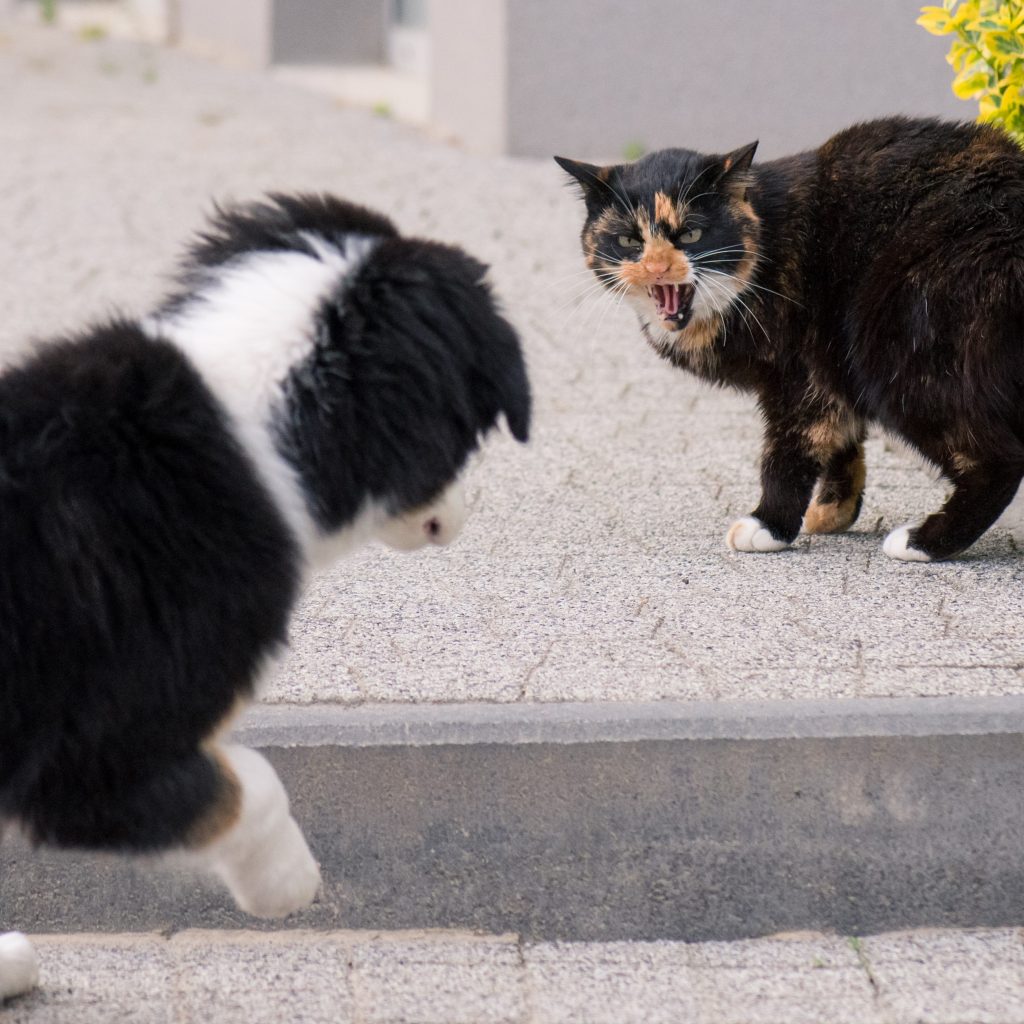

Building a Bonded Relationship
Shared Activities: Encourage bonding between the dog and the cat through shared activities, such as interactive play sessions or supervised walks, to foster positive associations and strengthen their relationship.
Respect for Boundaries: Teach the dog to respect the cat's boundaries and personal space, while providing the cat with opportunities to assert itself and establish its territory within the household.
Patience and Persistence: Understand that building a bonded relationship between dogs and cats takes time and patience, and continue to reinforce positive interactions while addressing any challenges that may arise along the way.


Final Thoughts
Introducing a dog to a new cat or vice versa requires careful planning, patience, and persistence to ensure a successful outcome. By following a structured introduction process, monitoring the pets' interactions closely, and providing support and guidance as needed, you can help foster a harmonious relationship between your dog and cat and create a peaceful multi-species household for all to enjoy. Remember that each pet is unique, and the timeline for integration may vary depending on their individual personalities and temperaments. With time, patience, and dedication, you can help your dog and cat become the best of friends and enjoy many happy years together.